
Spotting a coyote in an urban area while taking a leisurely walk with your pet can be surprising and may seem unusual. Yet coyotes have lived in North American cities for several decades. Their wary nature and tendency to avoid humans, however, often mean that they go unnoticed.
To better understand coyotes and their behaviour, ease some concerns, and foster harmonious and safe coexistence with them, let’s explore the different stages of their lives throughout the seasons and how they fit into our daily lives.
Winter: Mating
December through February
In winter, coyotes’ lives revolve around reproduction. Coyotes communicate their presence more often by marking their territory with scent markings, which can attract dogs’ attention. Between February and March, their vocalizations are more frequent.
During the winter, they may travel along maintained trails, which are easier to navigate than isolated areas where the snow is deeper. As a result, you may spot them more often in places you frequent.
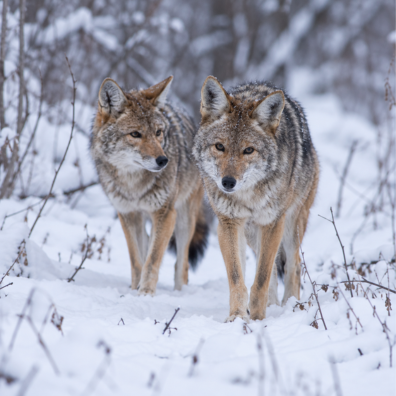
- In the winter, coyotes may be more visible and audible
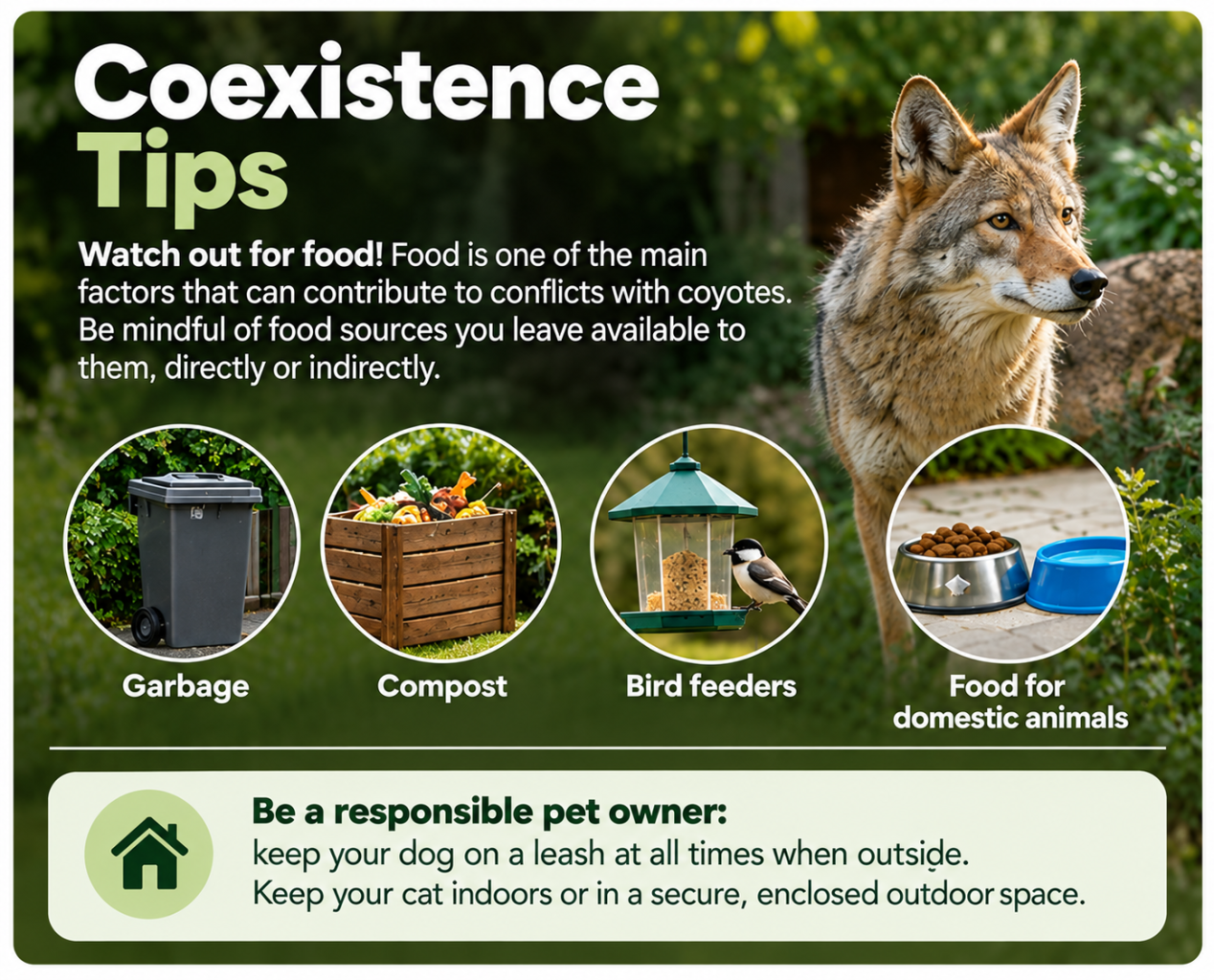
- We must keep our dogs on a leash and avoid following animal tracks in the snow.
Spring: Gestation and birth
March through May
After mating in February, the female typically gives birth in April to a litter of 4 to 8 pups. Blind at birth and entirely dependent on their parents, the pups spend their first few weeks safely sheltered in their den.
While the female watches over them, the male provides food and protection for the entire family. During this period, coyotes may be more alert and protective near their den, particularly when a dog gets too close. These natural behaviours simply reflect their parental instincts and their desire to protect their young.
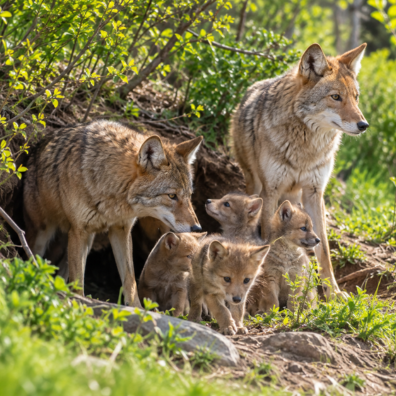
- We must keep a safe distance from dens and keep our dogs on a leash, allowing the parents to care for their young undisturbed.
Summer: First outings
June through August
In early summer, life for the little family gradually changes. At around two weeks old, the pups open their eyes and begin exploring the den. By around six weeks, they gradually venture outside the den and start exploring their surroundings. Following their parents, the pups learn to hunt rodents and insects and discover fruit. As they become more independent, they travel more frequently and farther from the den. During this period, young coyotes may be spotted more often in green spaces: curious, active and still inexperienced, they explore the territory around them.
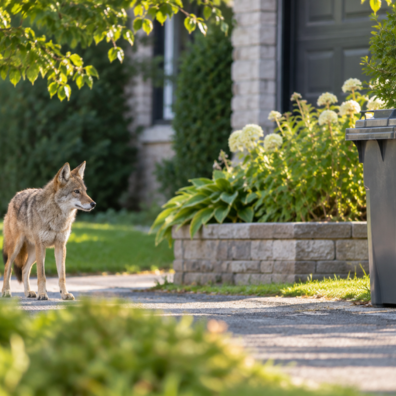
- In summer, young coyotes are more visible in green spaces as they begin to explore their surroundings.
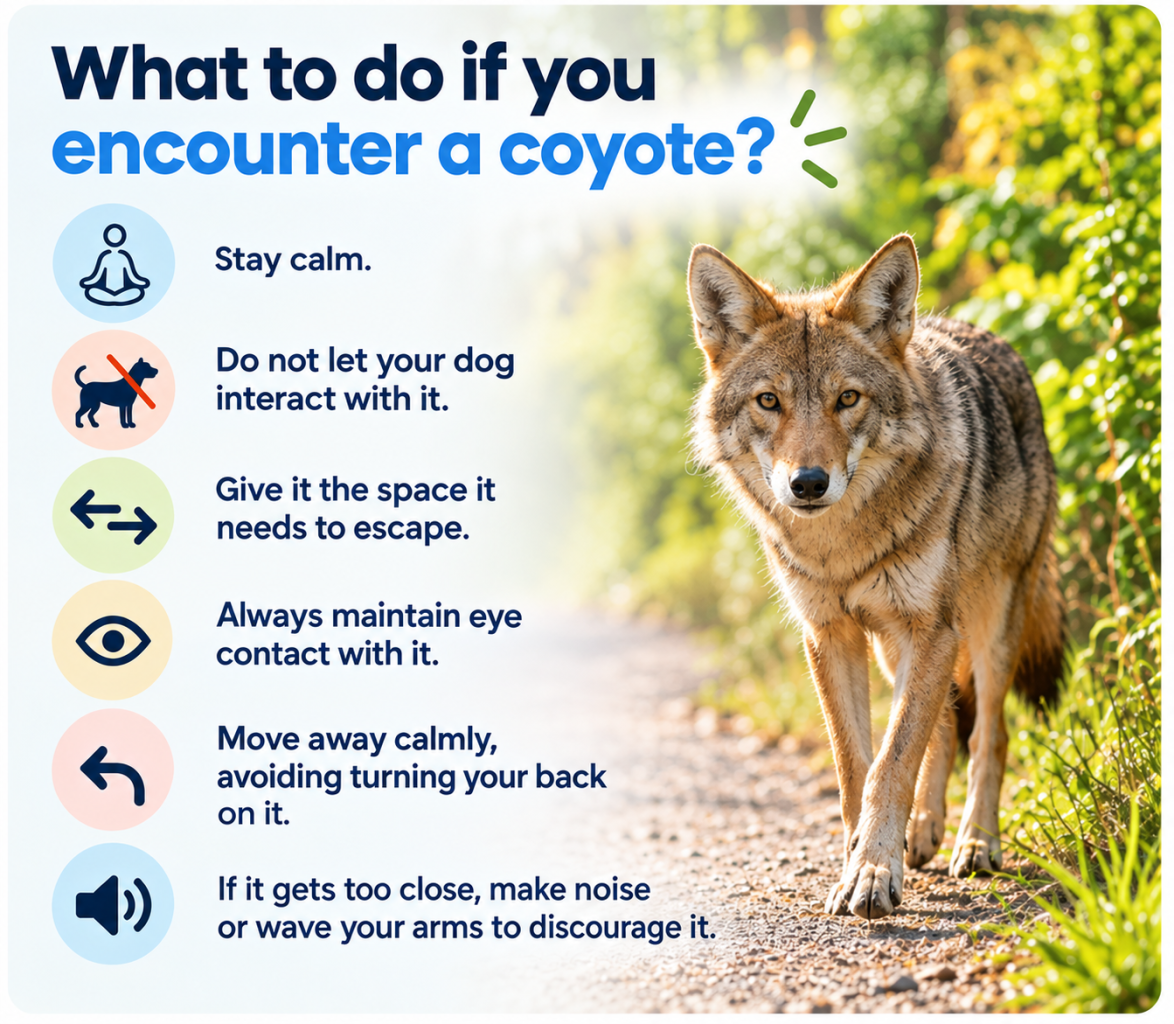
- Let's admire them from a distance and keep our dogs on a leash.
Fall: Family Hunting
September through November
In the fall, young coyotes become more independent and begin dispersing from the family den, looking for a new territory to settle in.
This is when we may encounter them more frequently. It is also when parents teach their young how to hunt, so it is not unusual to see several coyotes together at this time of year.
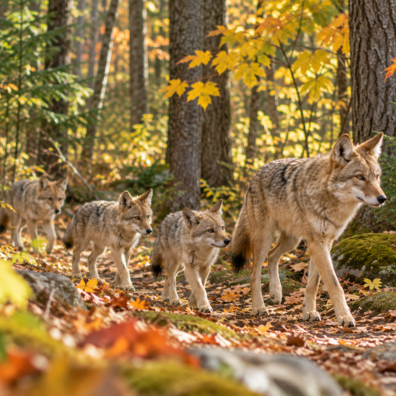
- We should avoid leaving food outdoors.
- Let’s give coyotes the space they need to move naturally through their environment.
Interesting Facts
- Two vocalizing coyotes can sound like there are many more: their different calls can respond to and overlap with one another, creating what is known as the “Beau Geste” effect.
- A shy neighbour: Coyotes generally adapt their movements to avoid humans. Many live for years near residential neighbourhoods without being noticed.
- A diverse diet: Coyotes feed on rodents, fruit, insects, fish, eggs and carrion.
- Small family groups: Young coyotes often leave the family den in the fall to settle elsewhere in their own den. As a result, each den is home to only a few individuals.
Information
- You can report a coyote sighting by calling the Coyote Information Line at 438-872-COYO (2696).
- For more tips and information: montreal.ca/en/topics/coyotes
The images in this article were created with the assistance of artificial intelligence (AI).